Fluted panels and wall cladding: where they work and how to specify them
Fluted and ribbed panels are everywhere right now, on TV walls, bed backs, wardrobes and kitchen islands. What they are made of, where they look best and the details that stop them looking dated.
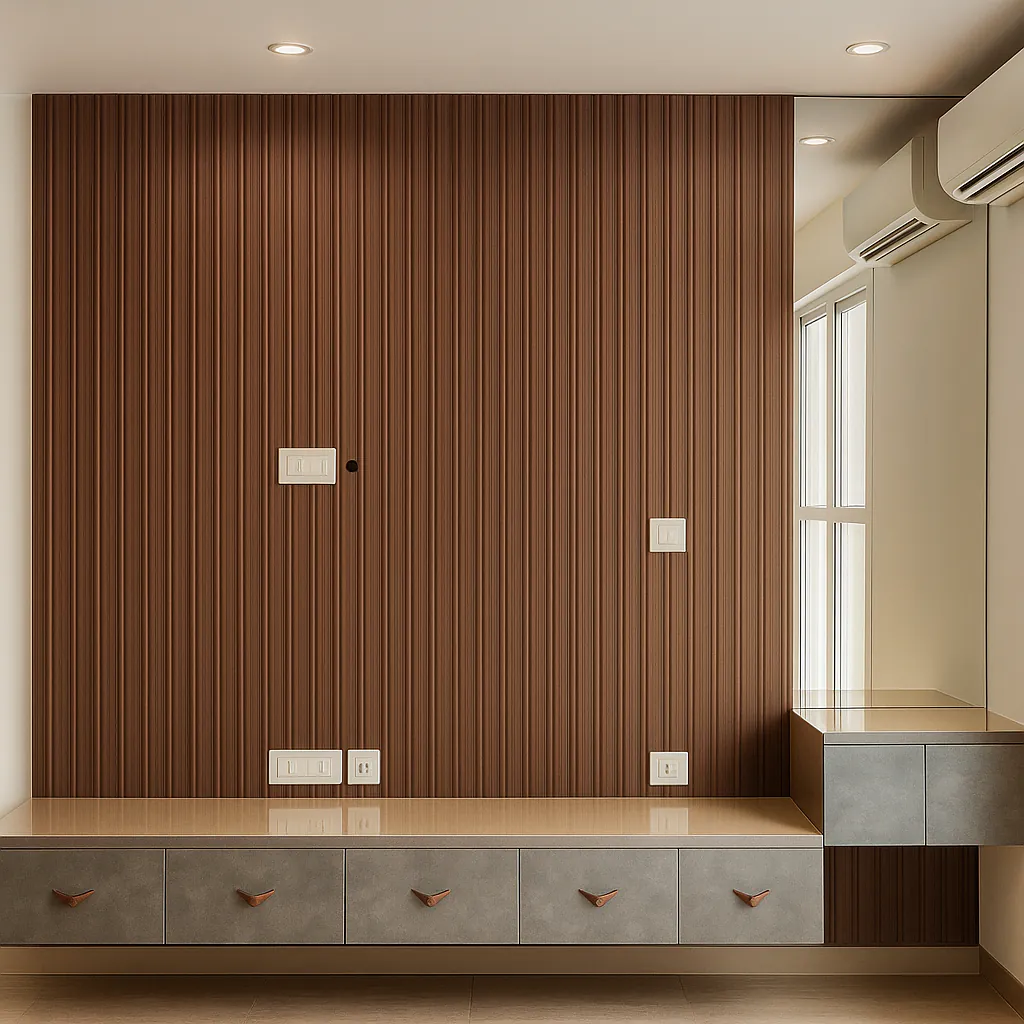
Fluted panels are surfaces cut with a row of parallel grooves or rounded ribs. They add texture and shadow to a flat wall without adding colour or pattern, which is why they have become one of the most requested details in homes: behind a bed, around a TV, on wardrobe shutters and on the front of a kitchen island.
The short answer: fluting works best as one considered surface in a room, in a material suited to where it goes, with its edges and joints planned. Used everywhere, or made from the wrong material for the spot, it quickly looks busy or tired.
What fluted panels are made of
| Material | What it is | Good for | Watch out for |
|---|---|---|---|
| MDF, routed and finished | Grooves cut into a smooth board, then painted, lacquered or veneered | Bed backs, TV walls, wardrobe shutters | Needs a good paint or lacquer finish; keep away from water |
| Solid wood or veneered strips | Individual battens or veneered profiles | Warm, natural feature walls | Higher cost; wood moves with humidity, so gaps must be planned |
| WPC (wood-plastic composite) | Moulded profiles that resist moisture | Areas near water, balconies, bathrooms (with care) | Finish range is narrower; can look plastic if chosen badly |
| PVC or polymer panels | Light, moulded sheets | Quick, budget-friendly cladding | Can look flat and synthetic up close; check heat and sunlight resistance |
| Fluted glass | Glass with a ribbed texture | Doors, partitions, shower screens | Lets light through while blurring the view; heavier hardware |
Where fluting works well
- Behind the bed. A fluted headboard wall frames the bed and softens a large plain wall. Pair it with lighting along the top or sides so the ribs cast shadow.
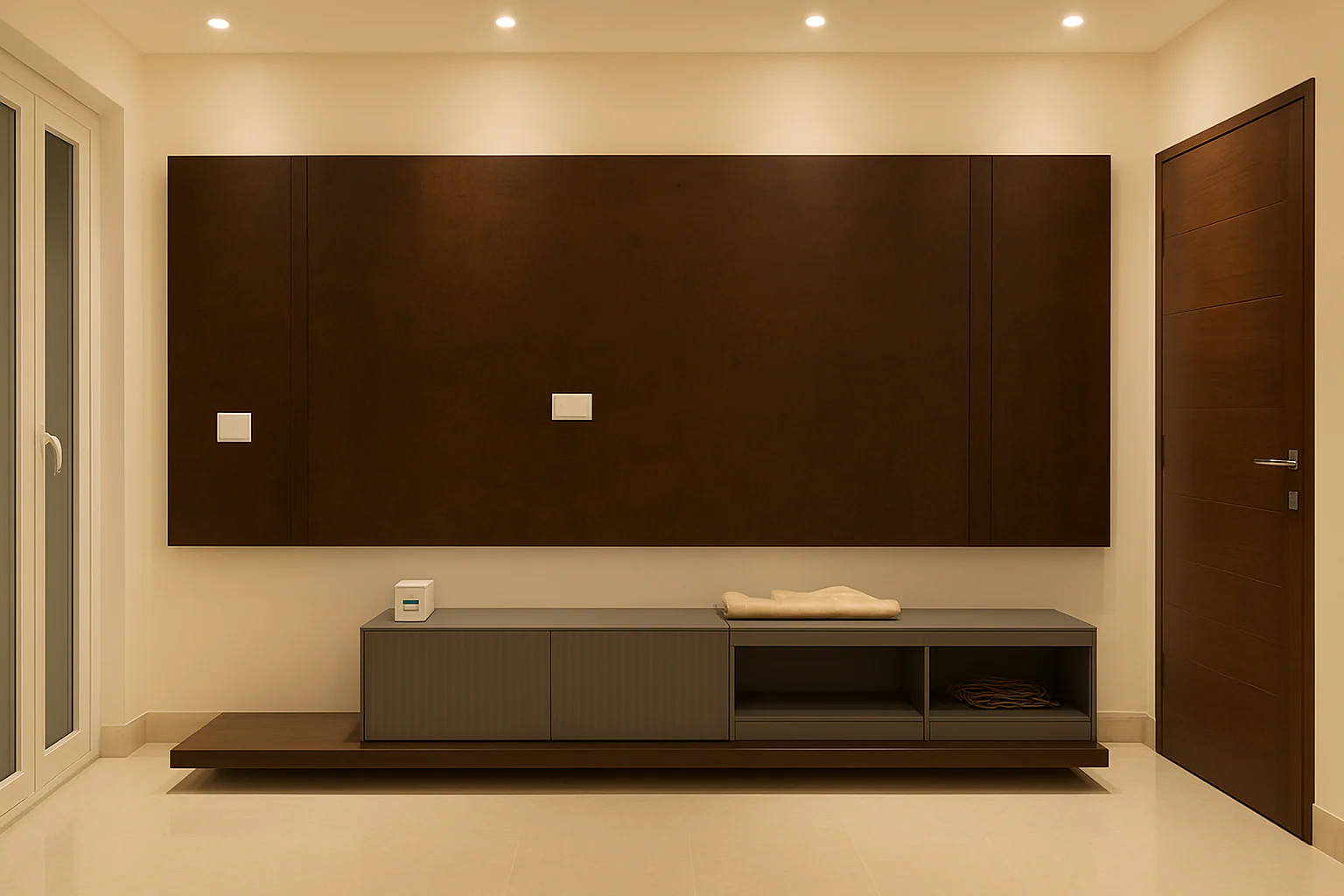
- TV and media walls. Fluting hides the visual flatness of a large screen wall, and service access can be built into the panels.
- Wardrobe and storage shutters. Fluted shutters make a wall of storage feel like furniture. Handle-free designs keep the ribs uninterrupted.
- Kitchen islands and bar fronts. A ribbed front adds texture at eye level. Choose a hard-wearing finish because feet and bags will knock it.
- Partitions. Fluted glass divides a room without blocking daylight.
Details that decide how it looks
- Rib size and spacing. Fine, close ribs read as a subtle texture; wide, deep ribs read as a bold pattern. Match the scale to the size of the wall and how far away you usually see it.
- Where the panel stops. Plan the edges: into a frame, against a ceiling cove, or wrapping a corner. An unfinished end is what makes fluting look cheap.
- Joints. Long walls need several panels. Ask where the joints will fall and how they are hidden.
- Lighting. Light grazing across the ribs from above or the side brings out the texture. Light from straight ahead flattens it.
- Switches and sockets. Place them before the panels are made, so they sit neatly in a flat band or a rib, not cut through the middle.
Cleaning and upkeep
Grooves collect dust. Deep, sharp grooves in a dark matt finish show it most. In kitchens and busy family rooms, choose shallower rounded ribs and a wipeable finish. A soft brush attachment on a vacuum cleaner handles most fluted surfaces.
When not to use it
- In a small room that already has patterned curtains, rugs and wallpaper: the texture competes.
- On every wall of a room. One fluted surface usually does more than three.
- On surfaces that get wet regularly, unless the material is made for it.
Questions to ask before you approve fluted panels
- What material and finish is proposed, and why for this spot?
- What is the rib width and depth? Can I see a sample piece?
- Where will the joints and edges fall, and how are they finished?
- How are switches, sockets and any access panels handled?
- How do I clean it?
In short
Treat fluting as a feature, not a default. Pick one surface, choose the material for where it is going, and decide the edges, joints and lighting before anything is made. For more on how finishes compare, read our guide to laminate, acrylic and veneer finishes.
More finished rooms and work in progress on Instagram: @think__woodspace (opens in a new tab)
See it in practice
- BedroomsBedroom interiors with headboard walls, bedside storage, wardrobes and soft, dimmable light.
- Living roomsLiving room interiors with seating, media walls, storage, art and layered light planned around everyday use.
- Wardrobes & storageWardrobes, lofts and walk-in dressing rooms designed from the inside out: what you own first, then the doors.