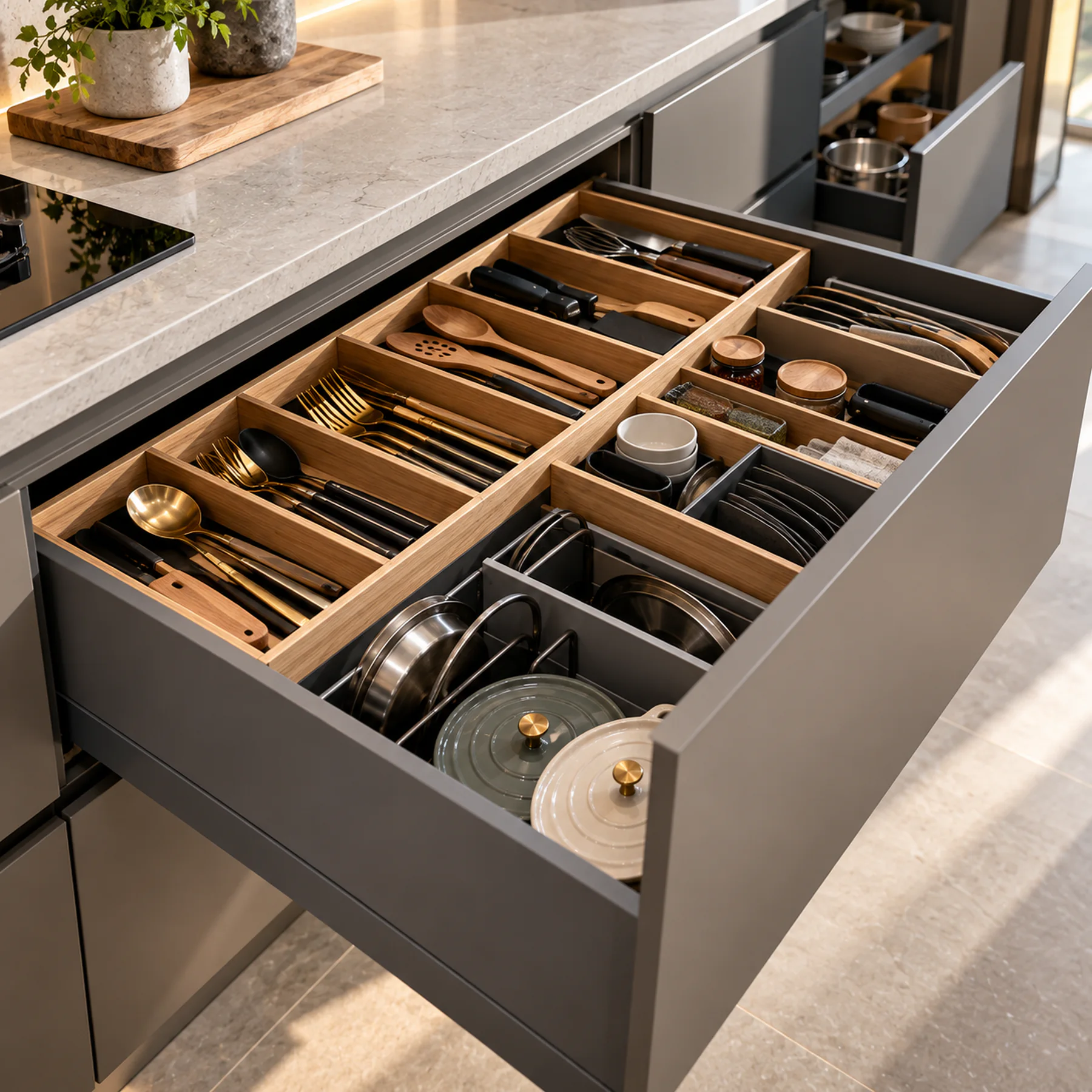
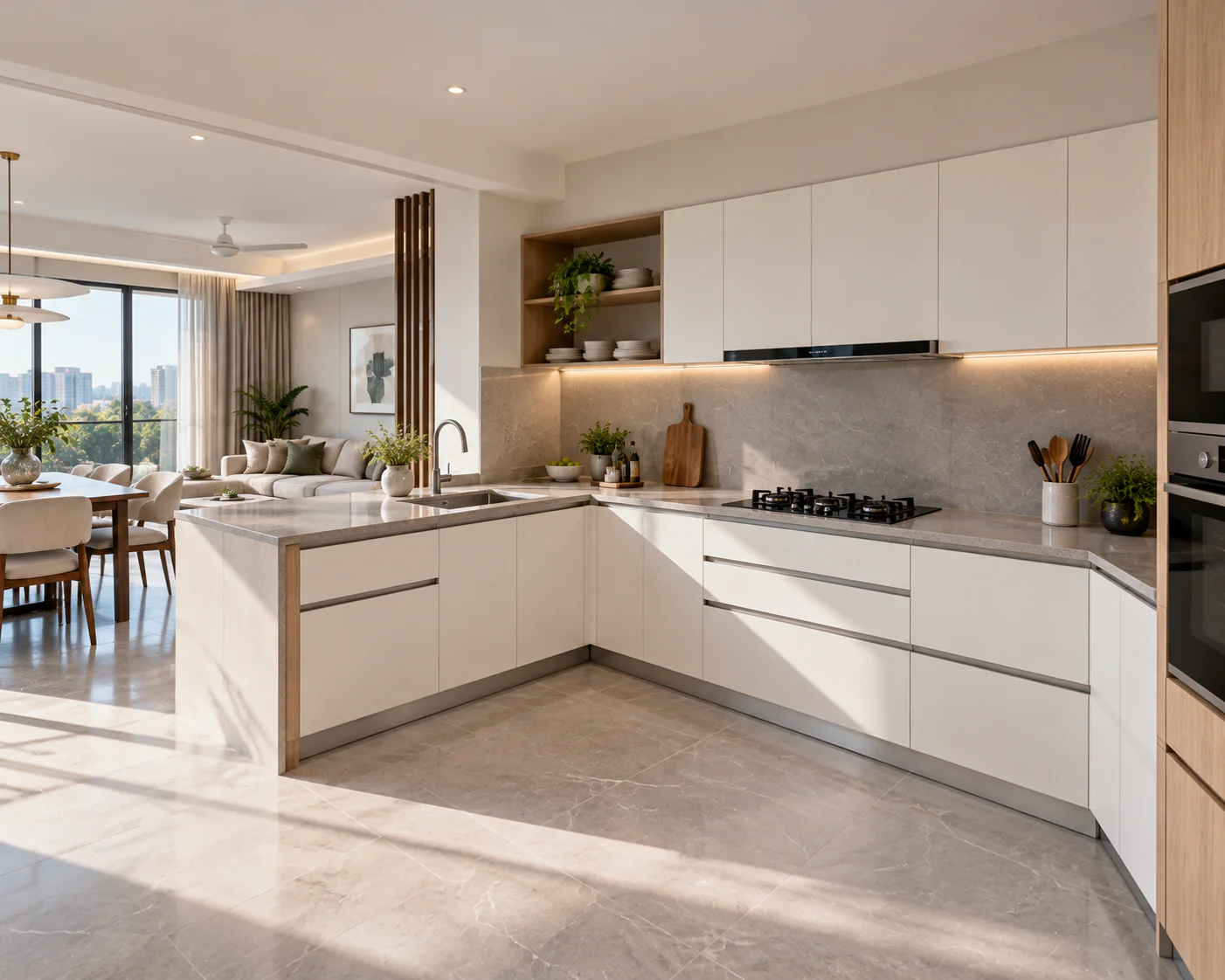
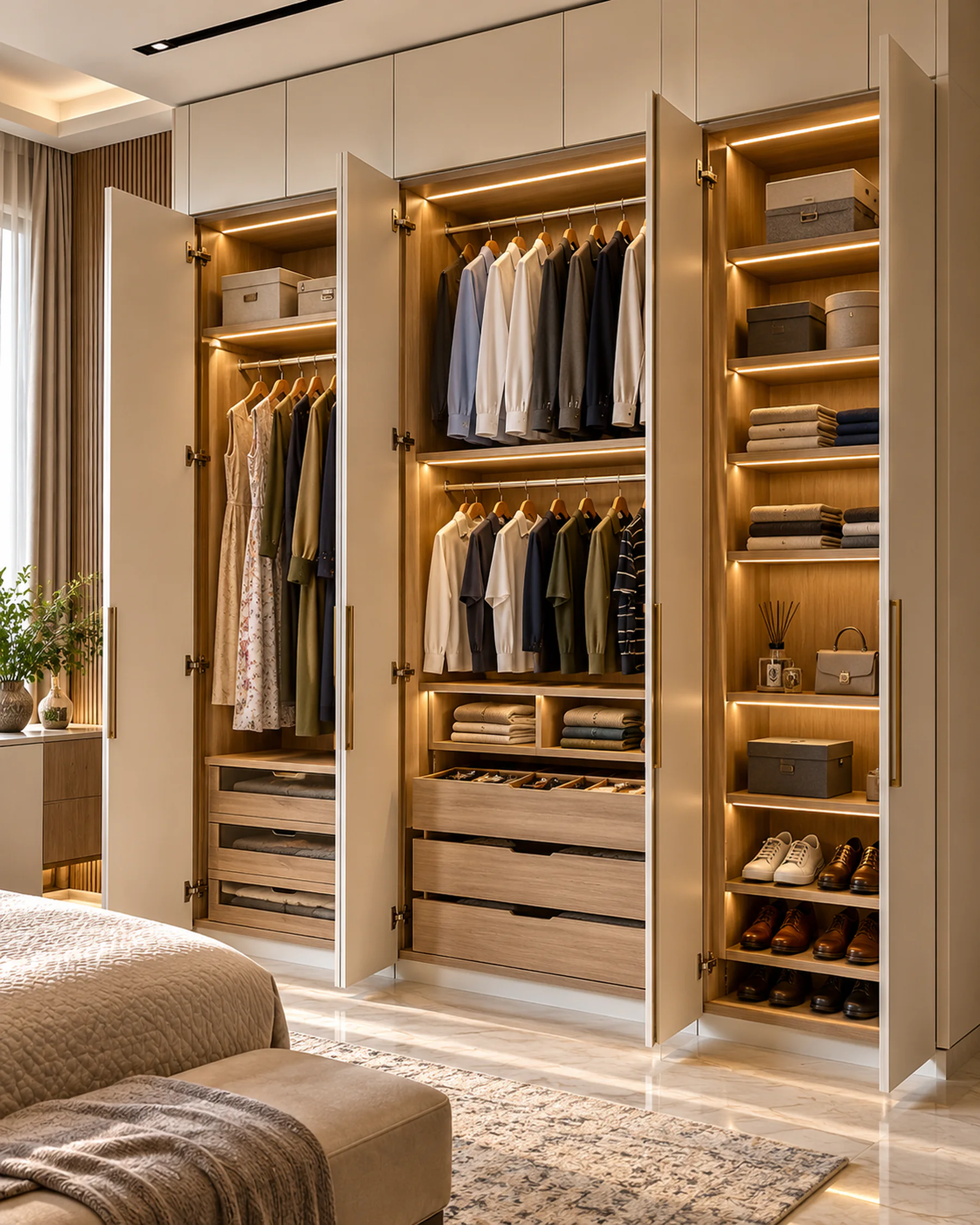
Laminate, acrylic or veneer? Choosing finishes for kitchens and wardrobes
The finish is what you see and touch every day. How laminate, acrylic, veneer and painted lacquer differ in look, feel and care, and where each one makes sense.
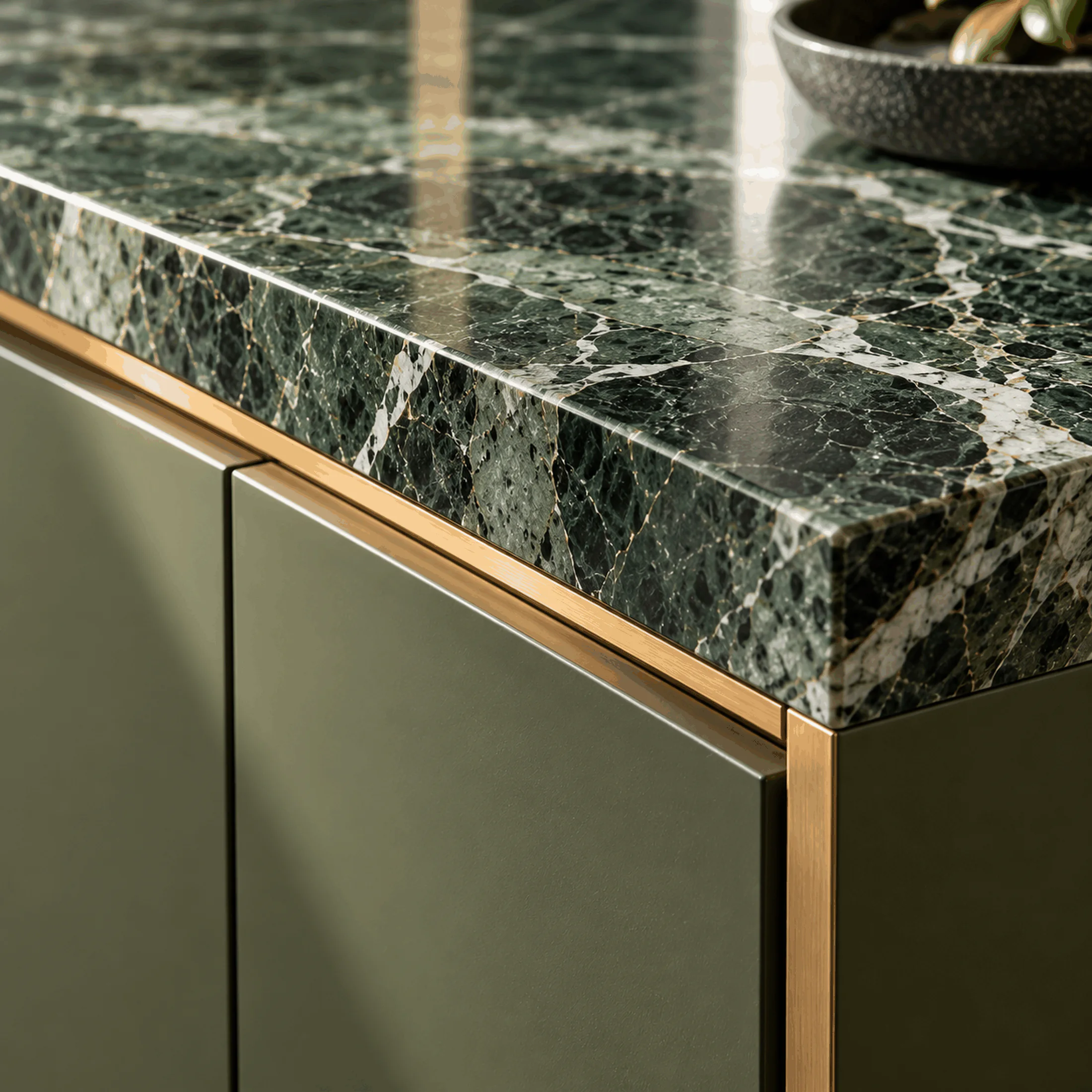
The finish on a shutter is the part of a kitchen or wardrobe you look at and touch most. It sets the colour and mood of the room, and it decides how much care the surface needs. The four you will be offered most often are laminate, acrylic, veneer and painted lacquer.
The short answer: laminate is the practical all-rounder, acrylic gives a smooth high-gloss look, veneer brings the warmth of real timber, and lacquer gives a seamless painted finish in almost any colour. Choose by where the surface is, how it is used and how much upkeep you are happy with.
What each finish is
- Laminate: a thin decorative sheet bonded to the board. It comes in a huge range of colours, wood looks and textures, in matte and gloss.
- Acrylic: a glossy acrylic sheet bonded to the board, giving a deep, mirror-like surface.
- Veneer: a thin slice of real timber bonded to the board, then polished. Every sheet has its own grain.
- Lacquer (painted finish): paint sprayed in layers on a smooth board, usually MDF, in matte, satin or gloss.
How they compare
| Laminate | Acrylic | Veneer | Lacquer | |
|---|---|---|---|---|
| Look | Any colour, wood or stone effect | High gloss, deep shine | Real timber grain | Seamless solid colour |
| Everyday care | Easy | Shows fingerprints and fine scratches | Needs gentle cleaning | Needs gentle cleaning |
| Repairing marks | Difficult; panels are replaced | Difficult | Can often be refinished | Can be touched up or resprayed |
| Feels like | Smooth or textured | Glassy | Natural wood | Smooth, painted |
| Often used for | Kitchens, wardrobes, utility areas | Statement kitchen shutters | Living rooms, wardrobes, feature panels | Contemporary kitchens and wardrobes |
Where each one makes sense
- Busy family kitchens: laminate, often in a matte or textured finish that hides fingerprints.
- A sleek, reflective look: acrylic, accepting that it needs more frequent wiping.
- Warmth and natural character: veneer, especially on wardrobes, wall panelling and living room joinery.
- An exact colour: lacquer, which can be matched to almost any shade.
Many homes mix finishes: a hard-wearing laminate on the lower kitchen units, for example, with veneer or lacquer on tall units or a feature wall.
Matte or gloss?
Gloss reflects light and can make a small kitchen feel brighter, but it shows fingerprints, water marks and fine scratches. Matte is calmer and more forgiving, though some matte surfaces need the right cleaner to avoid marks. Ask to see and touch a sample in daylight and under the lighting you plan to use.
Common mistakes
- Choosing from a small sample under showroom light without seeing a large piece in your own home's light.
- Putting high-gloss finishes on the most-touched doors in a busy kitchen, then being frustrated by fingerprints.
- Forgetting the edges: the edge band should match the face finish closely.
In short
Pick the finish for the place it lives. A practical finish where hands, water and heat are constant; a richer one where it can be seen and enjoyed. Ask what the board underneath is too, which we explain in Plywood or MDF?
More finished rooms and work in progress on Instagram: @think__woodspace (opens in a new tab)