Designing a pooja room or pooja unit: space, materials, light and care
Whether it's a dedicated room or a unit in the living area, a pooja space should feel calm and set apart. How to choose the place, size, materials, lighting, storage and ventilation.
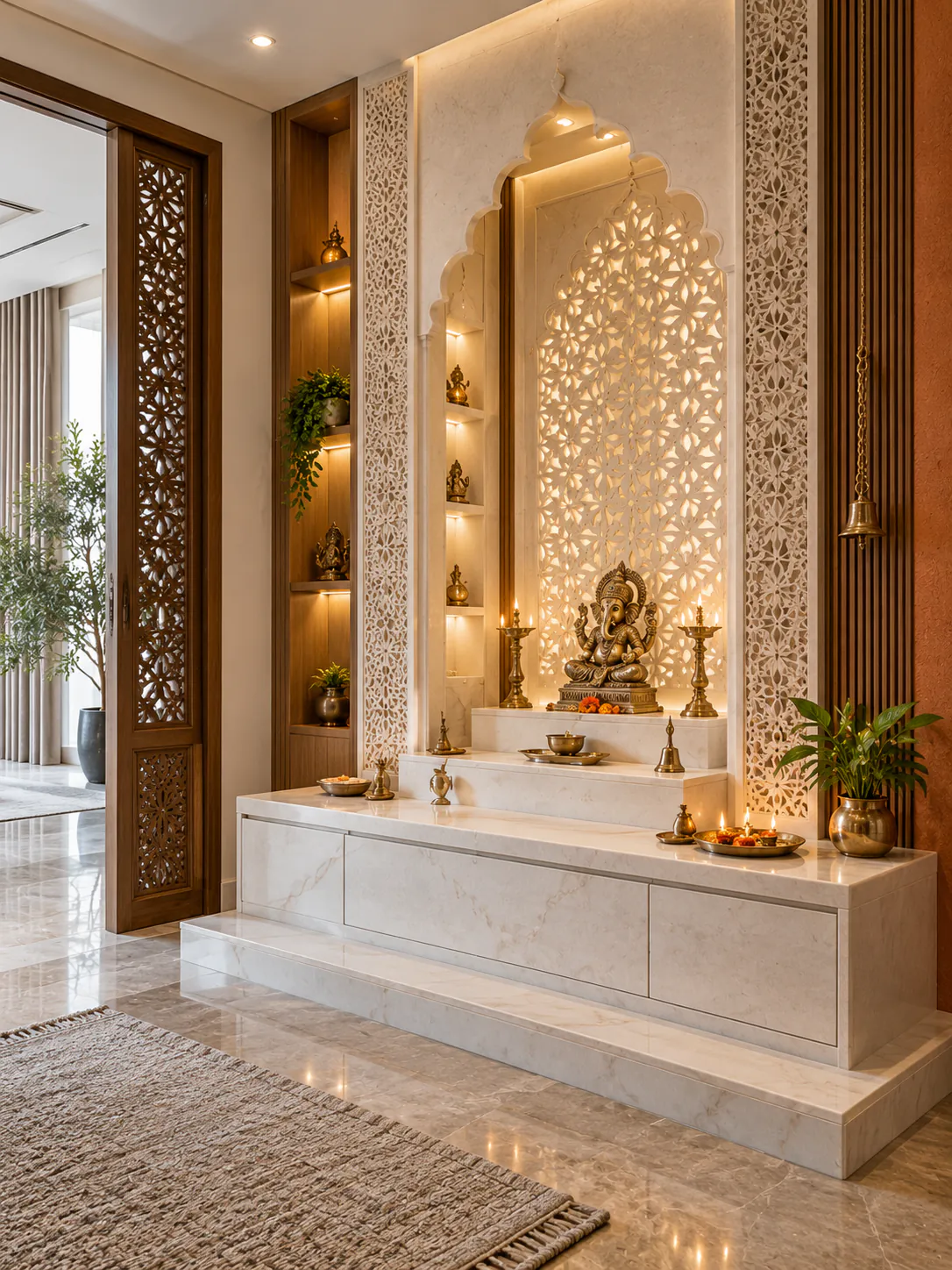
A pooja space is the one place in a home that's planned around a daily ritual rather than daily use. It should feel set apart, even when it's a compact unit in the corner of a living room, and it should be practical: diyas, incense, flowers and water all need a place, and the room has to be easy to keep clean.
The short answer: choose a calm, clean location first, then decide between a dedicated room and a unit. Plan the platform height, storage and light around the daily ritual, and use materials that cope with heat, smoke and frequent cleaning.
Room or unit?
- A dedicated pooja room gives space for the family to sit together, for festivals and for more storage. It needs a door or a screen and its own ventilation.
- A pooja unit fits into a living room, dining area or wall niche. It's often closed with doors when not in use, which keeps it dust-free and visually calm.
Either way, decide early. A room affects the floor plan; a unit affects the wall it sits on, including its power points.
Choosing the place
Many families follow traditional guidance on direction and placement, and it's worth discussing your own preferences at the very start. Practically, look for:
- a quiet spot away from the main walkway;
- not sharing a wall with a bathroom, where possible;
- some daylight or ventilation, because diyas and incense produce heat and smoke;
- space to stand or sit comfortably in front of it.
Sizes that work
- Platform height: set it for how the family prays. Lower if you sit on the floor, higher if you stand.
- Depth: enough for the idols or frames, a diya and a small plate, without reaching over a flame.
- Unit width: wide enough for what you'll display, plus a little space to keep it from feeling crowded.
Doors, screens and jaali
Doors with a carved or CNC-cut jaali let the space be seen and let air through while keeping it set apart. Folding or sliding doors suit tight spaces. Glass behind a jaali keeps dust out. For a room, a full-height jaali screen can replace a solid wall and share light with the space next to it.
Materials
- Marble or stone for the platform and floor: easy to clean, and it doesn't mind heat or water.
- Solid wood or veneered board for doors, shelves and back panels, finished to resist smoke and heat near the diya.
- Brass or bronze details age well and suit the setting.
- Keep heat away from laminates and fabric. Allow clearance above any flame, and use a heat-resistant surface where the diya stands.
Light
- A soft backlight behind a jaali or carved panel gives the space its glow and lights the idols evenly.
- A warm, dimmable light for daily prayer, separate from the room's main light.
- Plan the switches and sockets before finishing, including one for a small lamp or speaker if you use them.
Storage for puja items
Daily items should be within reach, and the rest put away:
- a drawer for matches, incense, diyas and cotton wicks;
- a shelf or drawer for books and festival items;
- space for a bell, plate and kalash so the platform stays uncluttered.
Drawers with dividers keep small items in order, and soft-close hardware keeps the space quiet.
Ventilation and care
- Smoke and soot settle on everything above the diya. A small exhaust or an openable window helps, as do surfaces that wipe clean.
- Oil and water: stone platforms and sealed wood handle spills; avoid open-grain finishes where oil may drip.
- Clean regularly with a soft, damp cloth, and re-polish wood occasionally.
A checklist before you start
- Room or unit, and where it goes
- Platform height for sitting or standing
- Doors, jaali or screen
- Marble, stone and wood for the right places
- Backlight and a warm, dimmable light
- Drawers and shelves for daily and festival items
- Ventilation for smoke and heat
See our pooja room design page, or tell us about your space and how your family prays.